
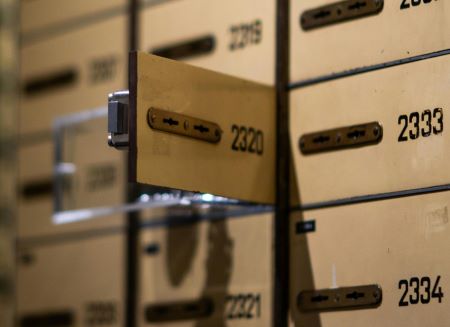
More and more banks are eliminating safe deposit boxes. Digital storage for certain types of documents is rapidly replacing physical storage. Many companies, doctors and hospitals, insurance companies, etc., have portals that allow you to access your relevant documents online, at any time, from anywhere.
That said, many people still own safe deposit boxes. They are an appropriate place to keep valuable jewelry, precious photos and similar items – but a terrible place to keep vital documents that you and your family may need in a hurry. And that includes many of your estate planning documents.
Who Can Access Your Safe Deposit Box in Florida?
- While you are alive:
You
Your co-owner
Your designated agent under a Durable Power of Attorney that specifically authorizes your agent to access the box, and has been acknowledged by the bank as having the authority.
- Once you pass on:
A surviving co-owner
The personal representative of your estate IF probate has commenced and the personal representative has been appointed by the court.
Other then the co-owner or personal representative of the estate, someone must be authorized by the court to enter the box. Even if someone else has a key to the box (for example, someone you designated as the power of attorney), he/she still requires court authorization. A bank officer must be present along with the authorized individual. The bank office will inventory the contents, and provide the Will and the inventory (or just the inventory if there is no Will) to the court. The bank is the party that must send it to the court; the person the court has authorized to be present for the opening may not take possession of any of the contents.
Note that your agent under your Durable Power of Attorney who could access the box while you were alive, CANNOT access the box once you are gone. His/her authority under the Durable Power of Attorney is no longer effective once you have passed on.
As you can see, it is easier and more convenient to make someone you trust a co-owner of the box (not just someone who has access under a Durable Power of Attorney). This avoids the hassle of getting access to the box.
Documents That Do NOT Belong In Your Safe Deposit Box
- Your Original Last Will & Testament
Your Last Will & Testament is the document that shows who you wish to serve as your personal representative. If it is squirreled away in your safe deposit box but your personal representative is not a co-owner of the box, he/she will not be able to access it quickly. Florida has a strict procedure that must be followed for him/her to gain access to the box. The steps require court involvement, and a witness and a bank representative must be present when the box is opened. All this takes time, delays the depositing of your Will with the probate court, and adds to the amount of time your family must wait until your affairs are wrapped up.
Where your Will does belong is in a safe place in your home, in a watertight and fireproof file cabinet, home safe or other receptable. You should make sure your personal representative knows where it is, and has the keys or combination to access it when the time comes. It is also a good idea to provide your personal representative with a copy.
- Advance Care Directives for Health Care
If you become incapacitated and cannot make health care decisions for yourself, your physicians may need a quick decision made. But what happens if the document that names your decision-maker and lists your preferences for health care is in a safe deposit box – and the bank is closed, or your health care agent lacks the authority to access the box? The wishes you so carefully included in your health care surrogate or living will may not be honored.
Like your Will, your Advance Health Care Directives should be kept in a safe and secure spot in your home, and your decision-makers should know where to find them, and also be furnished with a copy. It is also a good idea for these documents to be stored in the cloud, so that your agent has access at all times. Medical emergencies rarely occur at a convenient time.
- Durable Power of Attorney
Like health care decisions, many financial tasks can be time-sensitive, from paying utility bills to avoid utility shutoffs, paying the mortgage, managing investments, etc. Your agent under your Durable Power of Attorney will need the document to prove his/her authority to manage your financial affairs. Thus, your Durable Power of Attorney should be kept safe, but readily available to your agent. A secure place in your home is the optimal place to store it – not in a safe deposit box.
We also recommend that you furnish your Durable Power of Attorney document to your financial institutions, in advance, to confirm that they will honor it if and when your agent must act on your behalf. Banks and other financial institutions are notoriously finicky about accepting and honoring this document. That is understandable when you consider that an institution faces significant legal liability if it releases funds to an unauthorized party. Getting approval from the bank’s legal department can take time. And some banks, even if they approve your Durable Power of Attorney, will also require you to complete an additional in-house form.
- Miscellaneous Items That Don’t Belong In A Safe Deposit Box
Two other items that do not belong in your safe deposit box:
Insurance policy paperwork of all types: auto, health insurance, disability, life, homeowners. You will need these items to file a claim. If a natural disaster occurs, the bank may be closed or you may be unable to get there. And car accidents don’t always conveniently occur during bankers hours.
Funeral instructions, or pre-paid funeral policies. These too should be kept safe but accessible to the people who will need this information when the time comes.
Final Notes About Safe Deposit Boxes
A safe deposit box is a logical place to store heirloom items and important documents that you or your loved ones are not likely to need immediately. But if you do opt to store documents in a safe deposit box – whether your estate planning documents or anything else – make sure to list your personal representative or another trusted person as a co-lessee, so he/she can get to the documents when they are needed. It goes without saying that that person(s) must be 100% trustworthy.
Last, contrary to popular belief, the contents of your safe deposit box are not FDIC insured. If you want to insure items in your box, you may be able to add a rider to your home insurance policy or purchase a personal articles policy. Discuss this possibility with your insurance carrier.
