
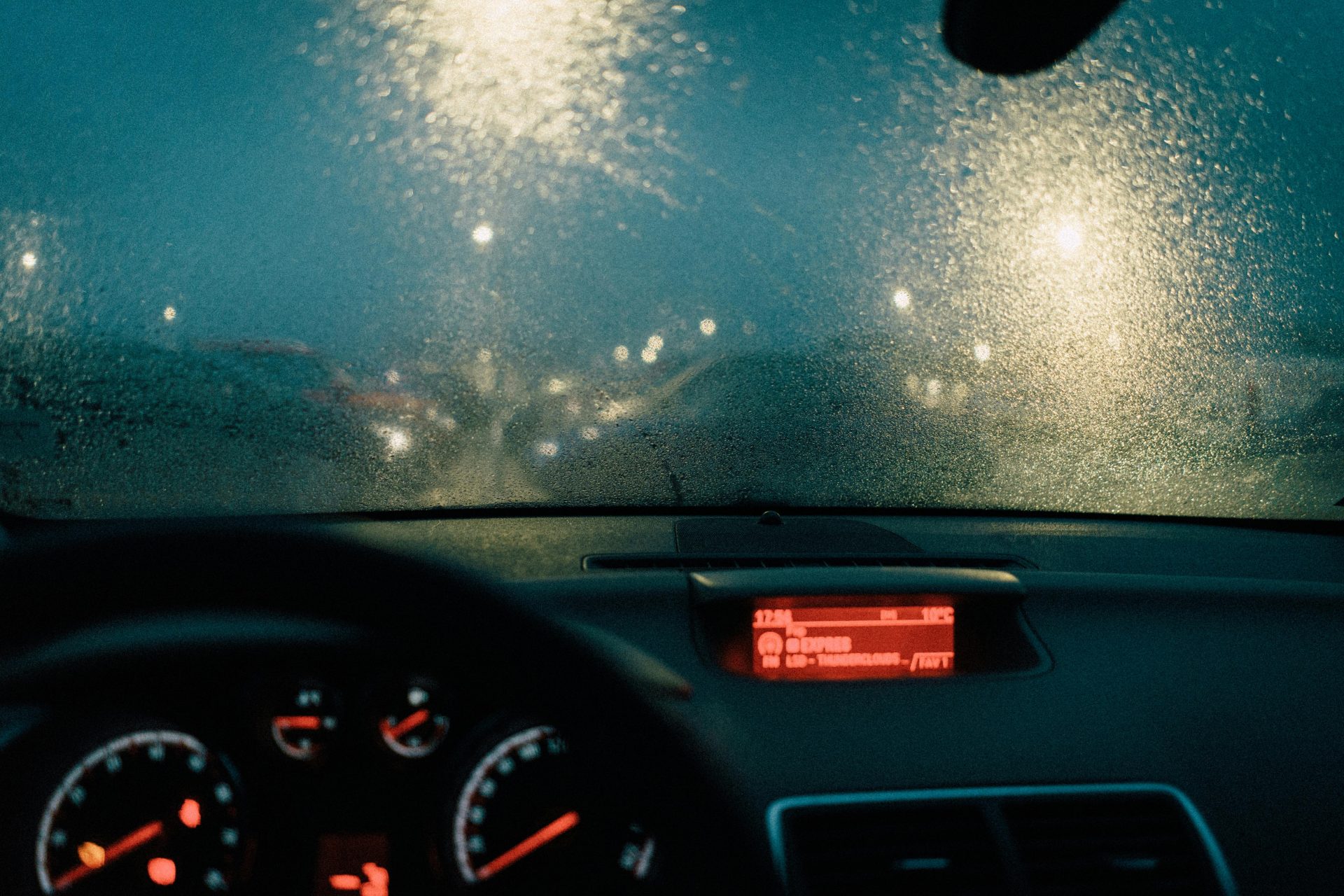
Florida’s rainy season has arrived. From May through October, we normally receive around 60 to 70 percent of our total annual rainfall. Some storms can be blinding, making driving hazardous. Ten percent of all vehicular accidents are rain-related, according to the Federal Highway Administration.
In this post we present safety tips for driving in the rain, culled from the Florida Department of Motor Vehicles, AAA and other authoritative sources. The information will be useful for all readers – young, seniors, and in-between. It should be especially helpful for newcomers to our area who have not yet experienced Florida’s intense downpours. So let’s rev up our engines and get started:
- Slow down and buckle up! Make sure everyone in your vehicle has their seat belts on.
- You must have your headlights (and taillights) on when your wipers are operating, per Florida statute 316.217. You do not need to use your high beams, which can reflect back and produce glare.
- If you have lived in Florida for a few years, you may recall a time you were not permitted to turn on your hazard lights in the rain. That is no longer the case. Now you can use your flashers if you think it will make you more visibile in hazardous situations – but only if you are on a road where the speed limit is 55 miles per hour or more.
- Check your windshield wipers. If they are not in good shape, replace them. Wipers should be able to clear your windshield in one swipe. Rubber inserts generally last between six and twelve months. The AAA recommends replacing wipers blades every 6 months or 6,000 miles.
- You should always signal turns, but in heavy rain, do it even more in advance.
- Traffic lights may not be working. If you arrive at an intersection where the traffic light is not operating and no law enforcement is there to direct you, treat the intersection as you would a 4-way stop. This means giving right-of-way to the vehicle that arrives first at the intersection. If you and other vehicles have arrived at the same time, you must yield to the vehicle on your right.
- Stay alert and eyes on the road. No texting or other distractions! (You should never text and drive, not even when the sun is shining!)
- Check tire pressure. Make sure your tires have sufficient tread; bald tires are dangerous. Good pressure and adequate tread help keep your vehicle anchored to slick roads.
- Hydroplaning (skidding) occurs when a layer of water builds up between tires and the road. When this occurs, most drivers reflexively slam on the brakes. However, that makes it harder to control the car. Try to stay calm (yes, easier said than done). Then take your foot off the accelerator and steer in the same direction the vehicle is going. You will come to a stop and your car will regain traction with the road. One way to avoid hydroplaning is by driving in the tracks of the car ahead of you. Also, avoid braking hard and making sharp turns. Gentle is the word!
- Never use your vehicle’s cruise control in a downpour. You will need to stay alert to changing conditions and adjust your speed accordingly.
- It seems counterintuitive, but the most dangerous time to drive can be shortly after the rain begins. Rainfall after a dry period brings oils to the surface of the road, making surfaces slick. If you can, wait a little while after the rain begins to get into your car.
- Your car windows may mist up because of rain or high humidity. Use your defroster or your air conditioner. If the defroster or air conditioner don’t improve things or are not working, open a side window a crack.
- Remember that if you are having trouble seeing the road, pedestrians and bicyclists may have trouble seeing you!
- Increase substantially the distance between you and the car ahead of you. You will need additional distance to brake safely on wet roads.
- At some point during the rainy season you will probably encounter standing water when you’re driving, in a street, parking lot or elsewhere. Try to avoid going through it. Turn around or go around if possible. The water may be deeper than you think. If you drive through it you may get stuck, and there may be hazards hidden under the water. Also, your brakes may not function properly if you drive through deep water, so go slowly once you emerge and test them.
- If you are on the road and feel driving is just too dangerous, try exiting, signaling well in advance. Find a safe place to park until the weather eases up. If you must pull over on the side of the road, put on your hazard lights. Do not get out of your car.
- If you can wait until the storm eases up, do so. Of course, many of us cannot do that – we have to go to/from work, deliver or pick up children at set times, etc. In that case, try to give yourself some extra time to get to your destination.
There is a silver lining to all this summer rain: Once a storm subsides, rainbows often appear. So drive safely and enjoy the show.
