
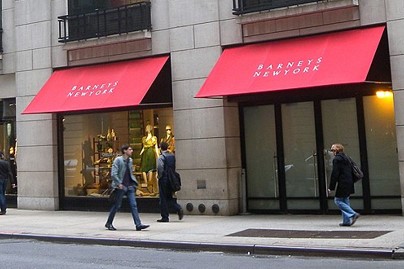
Phyllis Gurwin died in April 2024, age 95. If the name doesn’t ring a bell, maybe this will help: her first husband was Fred Pressman, son of the man who launched Barneys, the onetime posh men’s clothing store in New York.
Phyllis, Fred and their four children – Gene, Elizabeth, Nancy and Bob – ran the store for years. But the family business was replete with vicious infighting. Bob was considered the “black sheep.” Once head of the store’s financial arm, Bob was sued by his sisters in 1996 for allegedly cheating them out of $30 million; he was ultimately ordered to pay them $11.3 million. He responded with a countersuit, accusing his sisters of fraud, self-dealing and unjust enrichment. His brother Gene accused him of spending more time partying than working in the business. Barneys ultimately fell into bankruptcy and folded in 2019.
Phyllis’ Estate Plan
Phyllis Pressman’s estate is valued at about $100 million. It includes an oceanfront home in Long Island, New York, valued at about $40 million; an apartment in New York City worth about $4 million; and much expensive jewelry and valuable artwork. Her trust left her estate to Gene, Elizabeth and Nancy. She disinherited Bob, inserting this terse statement in her trust:“Bob doesn’t get anything for reasons he well knows.”
If you are a seasoned reader of our blog posts, you may expect to read that Bob went on to sue his mother’s estate. But that is not what has happened. Not exactly, anyway. Bob has taken a different tactic.
Alleged Florida Residency Is A Fake, Says Bob
Four years after Fred’s death, Phyllis married Joseph Gurwin and moved into his home in Florida. He died in 2009. In 2024, when Phyllis died, her estate paperwork stated she was a Florida resident. That allowed the children to inherit millions more than they would have inherited if she was New York resident, because New York imposes both estate and income tax.
Enter Bob, the disinherited child and now, a whistleblower. He has filed a lawsuit in the New York State Supreme Court, alleging that after her second husband’s death, Phyllis left Florida. She returned to New York which was in fact her permanent home at the time of her death. According to Bob, his siblings moved their mother back to Florida for hospice care just before she died, and also transferred her New York home into an LLC, all to support the fiction that she was a Florida resident.
So what’s in this for Bob? If it can be proven that Phyllis did not reside in Florida, her estate would owe New York up to $50 million in back taxes and penalties. And under New York’s False Claims Act, Bob would receive 30% of the money the state recovers, giving the black sheep the last, and very profitable, laugh.
How Can You Prove Florida Residency?
Florida’s favorable tax environment makes many people want to live here – and die here, too. If you are one of them, you must demonstrate that Florida is your legitimate permanent home. Do not assume that no one will ever find out if you are not, but claim you are. Other states, New York included, are not inclined to leave revenue on the table and look the other way. Here are the ways in which you can prove that Florida is your real home for tax purposes:
- Spend at least half the year, plus one day in Florida: 183 days. It need not be consecutive days.
- Purchase property in Florida, and file for your homestead exemption.
- Obtain your Florida voters registration card.
- Obtain a Florida drivers license and car registration.
- Make sure your mailing and permanent address is your Florida address on all your bank and brokerage accounts.
- If you still own real property in another state, have the tax bill for that property sent to your Florida address.
- File a Florida “Affidavit of Domicile.”
- Set up your banking arrangements with a Florida bank.
- Consult with, and have medical records transferred to a Florida physician.
- Affiliate with Florida religious, civic or other organizations, rather than retaining membership in out-of-state organizations.
- If you have existing estate planning documents, consult with a Florida attorney to have them modified to conform to Florida law. If you don’t have the necessary legal documents, discuss your needs with a Florida lawyer and have him/her create the appropriate documents for you.
- If you have a safe deposit box in another state, move the contents to a safe deposit box in Florida.
- Alert all the agencies and businesses that require your address, such as Social Security, credit card companies, etc., of your Florida address and have correspondence sent to that address.
